

Your relationship with the road enters a new era when you start logging miles on an electric bike. Riding with “pedal assist,” the mechanism through which the motor helps you pick up momentum, is like switching over to the express lane: Your pedaling efforts will take you further — and faster.
What is pedal assist?
Pedal assist is part of what puts the “e-” in “e-bike,” connecting the motor with your movement. Sensors at the pedal mechanism pick up your pedaling activity and communicate details about it to your e-bike’s motor. The motor converts those messages into a certain amount of power output that propels the bike forward.
When pedal assistance kicks in, you’ll feel that you start to move faster — even if you don’t change what you’re doing.
Why ride with pedal assist?
Even if you like riding a traditional (non-electric) bike, there are good reasons to go electric occasionally. Among them:
Types of pedal assist
There are two types of pedal assist, cadence-based and torque-based, and each makes for a slightly different riding experience.
Riding with pedal assist
All BeeCool e-bikes have cadence-based pedal assist. How much assistance you’ll get from the motor depends on a few other of your bike’s features. (If you need to consult the user manual for your BeeCool e-bike to see which yours has, our user manuals always live online.)
1) The maximum riding speed for your model
Pedal assistance will only kick in if you are riding below that maximum mph. If you ride under that threshold, the motor will deliver power boosts to help you hit that maximum mph. If your pedaling efforts surpass that speed threshold, the motor will no longer help power you along.
2) Pedal assist levels (also known as “speed modes”)
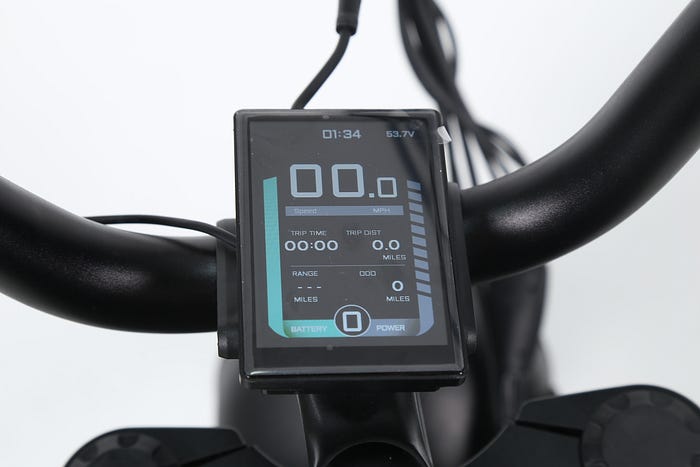
If your bike does have multiple speed modes (usually indicated by a dedicated toggle switch on your handlebar or “+/-“ buttons near an LCD screen), each of those speed modes has its maximum mph.
The highest level will give you power until the maximum riding speed mentioned above. But the lower levels each have their own pre-set speed thresholds — so if you’re riding in one of those, you’ll get pedal assistance only up until its designated threshold. For example, the BeeCool e-bike offers 5-level modes; at level 5, you’ll get pedal assistance as long as you’re riding under 28 mph; but at level 1, pedal assistance will only help you reach 10 mph or less according to the sensitivity you set for the PAS.
Switching to a lower pedal assist level can help you control your speed to follow local speed limits when riding in dense areas or to provide comfort for beginner riders, for example. Here are a few other notes on using pedal assist levels on an e-bike.
3) Gears
E-bikes with gears make it even easier to fine-tune your riding experience to get exactly the effort level, amount of exercise, and speed you want.
First, let’s remember how gears work.
When you think about how to use gears and pedal assistance together to create the ride you want, think about them like this: Gears will most affect how the road feels under your feet — heavy/sticky (high gears) or light/slick (low gears) — and pedal assist is more about propelling the bike forward. It takes some time experimenting with the two to feel how they “feel” when used together.
There are other good reasons to familiarize yourself with the gears on your e-bike as they relate to pedal assist.
4) Throttle
If your e-bike also has an acceleration throttle, it functions independently from pedal assistance. If you use the throttle to accelerate and ride, the motor will do all the work to keep you moving. No pedaling is required, and there will not be any pedal assistance if you rotate the pedals. All BeeCool models have the throttle mode.
